Late to the party – Titanfall 2 (PS4)

The first Titanfall was quite popular among my circles. The concept of Titans, giant mecha-exoskeletons that could operate with or without a pilot, was lauded for its coolness. I recall how bitter I was that I couldn’t play it, because I did not have any of the then-current platforms to play it on. This disappointment was softened somewhat once I heard that it wasn’t a particularly great game. The impact of statements about Call of Duty Black Ops stealing the jumpsuit ideas was softened by this too. When I heard about its sequel, Titanfall 2, I wasn’t particularly interested.

I regret that decision. In December 2019, Titanfall 2 was free for PlayStation Plus members, so I picked it up, not expecting much beyond some cheap action thrills. After I downloaded the game, I didn’t even bother playing it for several months. What a fool I was.

It is tragic that Titanfall 2 is not widely and popularly regarded as one of the greatest first-person shooters of recent times, perhaps even of all time. I never played the original Titanfall, but if there were any issues with the game, they were definitely resolved in the sequel.

The controls felt smooth and never obstructed the experience. Wall-run and midair headshots never felt so cool. Controlling a pilot was extremely easy, just like any other good first-person shooter. This translated well to controlling Titans as well. The developers at Respawn really nailed making the Titan aiming and movement controls feel familiar, but slightly unnatural. In this case, unnatural was good because I was constantly reminded that I was controlling a Titan, and not a pilot. Titanfall 2 is contains segments without Titans, and these segments felt more agile. This is exactly how it should have felt, and I was impressed that it was done so well.

This game made me become more interested in science fiction. I’ve never been particularly thrilled about giant mechs or laser rifles, but steering Titans changed that. There were a variety of Titan loadouts, several of which offered different approaches to combat. The Scorch Titan class functioned as a flame-slinging juggernaut, while the Ronin Titan class felt like I was piloting a giant, teleporting cyber-ninja.

Titanfall 2 contains a single-player campaign in addition to its multiplayer modes. Usually, first-person shooters have relatively disappointing campaigns rife with stale action tropes. Titanfall 2 contained some of these: an unsurprising NPC death near the beginning of the story, over-the-top and sometimes corny villains, and even characters sacrificing themselves for the mission. Despite all of this, I found the campaign entertaining. The writers certainly didn’t reinvent the wheel, but the story and gameplay were integrated so that they never interrupted one another.

The multiplayer takes everything exciting about the campaign and dials it up to 100. The first time I played, I was so overwhelmed with all the in-game radio chatter, explosions, not to mention the shock of having a Titan dropped on me. After a few games, I got the hang of it. This is another compliment to the game – it’s not too difficult to pick up. Teams consisted of a mix of other players like me, and characters operated by the game itself. The latter aren’t very clever at all and function as speed bumps for most players. I really appreciated this feature because I could use the computer-operated enemies to contribute towards my team winning. This translates to accessibility for players who might not be as skilled, while still rewarding players who invest more time in the game. It wasn’t long before I learned how to properly use my pilot gadgets to consistently best other players and summon my Titan multiples time every match, or build killstreaks. I have lots of games to catch up on, but I still come back to Titanfall 2 multiplayer every so often because it’s just so much fun.

All of this to say that I hold Titanfall 2 as one of the most pleasant surprises I’ve had recently. Until I did some research, I was baffled as to why the game didn’t have the buzz its competitors do, especially when it came from companies like Respawn and EA. To summarize, EA just didn’t care about it, and it was probably a mistake on their part. If they had released Titanfall 2 on a different date, the game would have done a lot better. I think there’s an important lesson here about industry propaganda inhibiting the success some games deserve while spotlighting games that simply don’t deserve to be praised. Titanfall 2 is a Triple-A game that the developers obviously worked very hard on, but it didn’t get nearly as much attention as some of its peers from the same publisher. Nowadays, we have games like No Man’s Sky, Fallout 76, and Cyberpunk 2077 that et so much hype up to their release, only to be an initial disappointment because they can’t live up to it. The story of Titanfall 2’s is one that presents a valuable lesson – we don’t always have to believe what we hear. We can try things for ourselves. And who knows – we might be surprised to find we made a great choice.

Thanks for reading, and be sure to check out my other entries in the “Late to the party” series!
Late to the party – Here They Lie (PS4)

this article was originally written in July, 2020

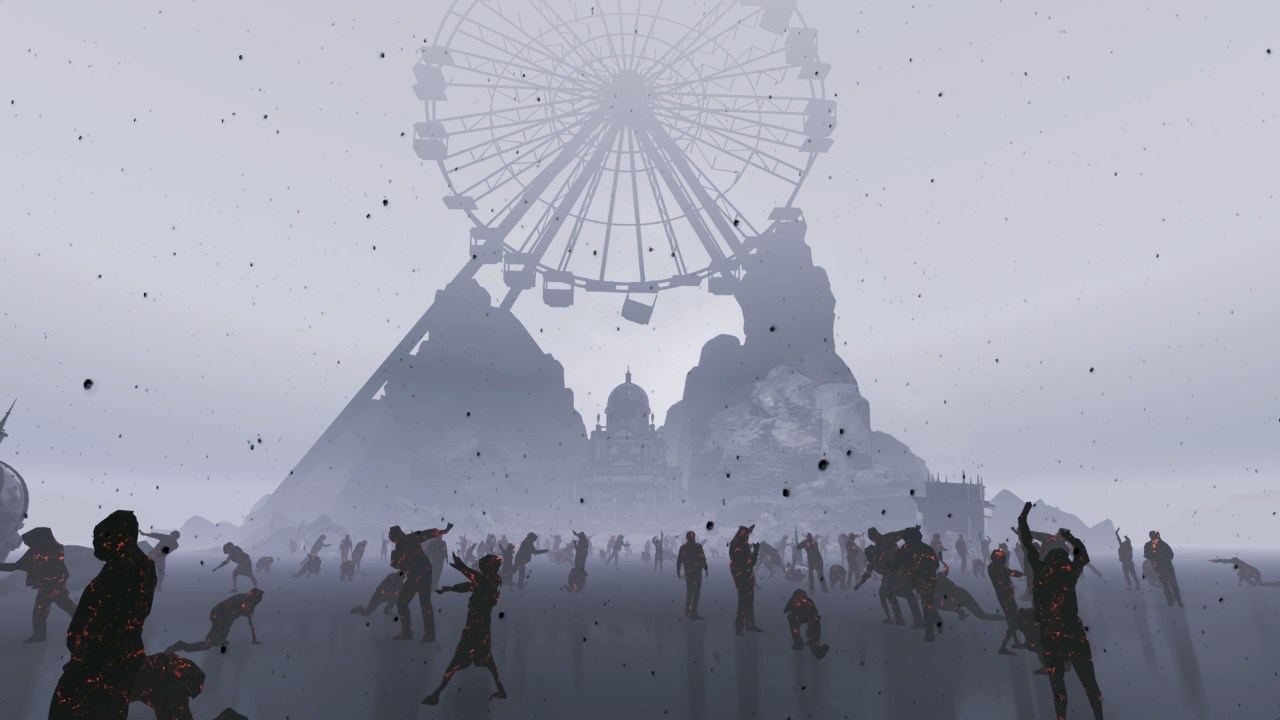
Here They Lie is an atmospheric game that caught me off-guard. I went into the game blind, enticed only by the striking cover art in the digital game store. With such a cryptic title, I didn’t know what to expect from the Tangent Games (formerly Tangentlemen) 2017 release.

From the onset of the game I was injected into such a vivid, surreal world. Little did I know I was getting into some psychological horror that sometimes wrecked my nerves. The juxtaposition of the glow emanating from Dana, the mysterious woman that stands at the center of the game’s menu, against the dark and twisted world both she and the protagonist Buddy navigate effectively disarms the player of the ability to make sense of the game. This thick shroud of mystery and confusion veils several underlying themes.

Perhaps Here They Lie functions as an allegory with commentary on the human condition and its effect on the world, though it fails to do so effectively. In the beginning of the game, Dana makes several comments on the disconnection between she and Buddy, as well the uncertainty regarding their reconciliation. Maybe the game is an attempt to tell a story about the potential divorce of God and man – Dana and Buddy, respectively. Buddy made a decision that contributed to the twisted world he wanders, all while Dana displays pure warmth, patience, and kindness. Their contrast is interesting, but not as developed as the contrast between Dana and the environment. Despite this potentially engaging story, I found that Here They Lie was simply trying too hard. Sometimes it felt like I was being beaten ragged with the game’s messages. As I progressed through the game, I had questions about what was happening and why. When the credits started rolling, I still had more questions.

Confusion is one the game’s primary tools, which it relies on too heavily. The symbolism and imagery were obviously left ambiguous as to be open to interpretation by the player; the developers want the player to come to their own conclusions. This is a risky mechanic to practice because puzzles can get boring if they aren’t presented in an engaging manner. This is the game’s biggest downfall; its story is so convoluted that I couldn’t tell what was happening sometimes.

This convolution carries over to an aspect of the game done far better than the story – the setting. The world of Here They Lie is a twisted nightmare. Warped tunnels and flickering neon lights made me consider my next moves carefully. Sometimes an NPC would grunt at Buddy, making me retreat to find another way forward. The guttural croaks of the game’s monsters would often stop me in my tracks and make me proceed with caution.

Here They Lie was at its best during its first hour and a half. The tension and game pacing were perfect. The first two jump scares actually frightened me. The atmosphere of the first two parts of the game kept me on the edge. Then, there was what felt like an on-rails running simulator through a bit of the game before there was a massive change of pace. This new setting was a refreshing contrast from the previously bleak surroundings, but the sudden change of pace killed all of the suspense and tension the game had built up. Awe and disgust replaced all the anxiety I had before, which was a good thing since that is what this section of the game was going for. The pacing became less consistent and the revulsion I had felt originally wore off.

In the end, I was left dissatisfied that the second half of the game didn’t live up to the set-up lain by the first. Sneaking around monsters that were inconsistent in their reactions to Buddy’s flashlight or proximity got repetitive for such a short game. My favorite part of the game was near the middle, and it was completely different from the rest of the game. If you’ve played the game, you know exactly what I’m talking about. Overall, the cryptic story of Here They Lie didn’t do anything for me, but I think it functions as a good template for what could be. I enjoyed both the visual and sound design, but nothing more.

Late to the Party – Psychonauts (PS4)

last updated December 19, 2020

Recently, I had the privilege of playing an old gem. I’m referring, of course, to Double Fine Productions’ Psychonauts, a now-cult-classic from the days of the PlayStation2. I was 10 years old when the game was released, and I think I remember seeing it on a Blockbuster shelf. I never got around to playing it as a child, but I really wish I had. Apparently, this experience wasn’t unique because Psychonauts was not commercially successful. After playing it for myself, I can’t tell you why that was.

From the very beginning, Psychonauts had me hooked. In the game, we follow 10-year-old Raz (Razputin), a gifted circus runaway who infiltrates Camp Whispering Rock Summer camp, a program for psychic children. The camp trains psychics on how to control and develop their powers, with the potential to one day join a clandestine group of the elite psychics, known formerly as the Psychonauts. Coincidentally, the Psychonauts have their own comic book, which the game makes numerous inner references to via exposition from Raz. Owned by no one, the mysterious organization moves in the shadows, waging psychic wars to serve purposes beyond understanding. At least that is how Raz saw them.

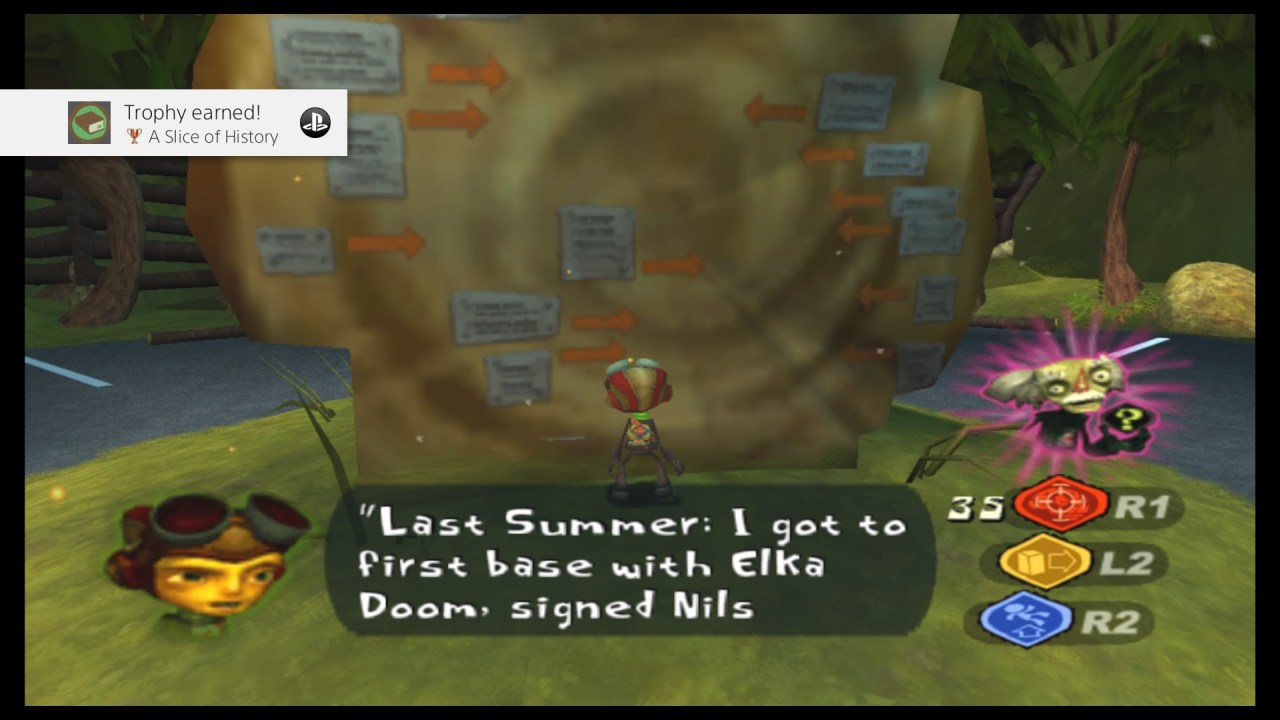
Psychonauts starts off with a psychic bootcamp led by one the camp’s instructors, Coach Oleander, to introduce the campers and player to the controls and general feel of the game. This experience establishes the precedent that each level within the game will be within the mind of one of the game’s characters. In the first level, Oleander’s Basic Braining, we witness the manifestations of both conscious and subconscious content from Coach Oleander. This tutorial is reminiscent of an active warzone, complete with explosions, barbed wire, and airplanes. Oleander has some baggage – literally. Playing on the endless comic potential available with such content matter, in Psychonauts, emotional baggage serves as one of many collectibles. Finding all of these unlock bonus content like concept art and character backstories, which I enjoyed unlocking and viewing.

The cartoonish style of Psychonauts does a superb job of tastefully humorizing serious concepts, like war, while also introducing psychology and subconscious trauma in a way that is entirely enjoyable. If you actually gather the collectibles throughout the game, you will discover that many of the game’s characters have major issues hidden beneath the surface. It really got me to consider how many people I probably meet every day that are secretly living in their own warzone.

Along with the camp staff and campers, we quickly discover that Raz possesses a talent for developing and managing psychic abilities. Before long, he’s running circles around most of the other kids. He’ll pick up various psychic abilities, like using hid mind to blast enemies from afar. By the end of the game, Raz is much more powerful and mobile than he was at the beginning. This development feels entirely natural, and any challenge that you and Raz overcomes does not feel forced. It made sense when Raz won or lost. It is always refreshing when this is the case, as it demonstrates very strong writing and plot.

Speaking of writing, Psychonauts is a masterpiece. The story itself is as believable as it is ridiculous, and enjoyable paradox that kept me coming back for more. Jokes and archetypes portrayed by the cast were often time hilarious and interesting, making me laugh out loud or question what I would have done in those situations. Raz is not just a vessel for the player. Often, after I steered him into interacting with objects or characters throughout Whispering Rock, Raz would express his own perspective. These moments were enjoyable because it felt like Raz was actually part of the story. The plot was predictable at times, but part of that could be because the gaming stereotypes exhibited in the game were probably less cliché back when Psychonauts was new.

The main story was not the only enjoyable part of the game; the other campers had their own objectives. One hunted for an invisible, hairless bear while another become involved in a squirrel conspiracy (you read that right). Each level had its own distinct feel and mechanics. One level ran like a classic platformer, while another felt like I was steering Godzilla in one of their own movies. Often the new powers would be the central mechanic of the level it was introduced in, while also demanding that the player mastered previous mechanics to progress. I really enjoy the main menu, where you control Raz running on an actual brain to load into your save.

Compared to games today, I found the style and character of Psychonauts to feel very original. It has become one of my recent favorites. The game never felt like it was trying to be anything other than itself, and I can see why it gathered a cult following. I only wish I wasn’t late to the party on this one. Better late than never, because I will be one of the first excited fans to play Psychonauts 2.

Late to the Party – Journey (PS4)

last updated December 19, 2020

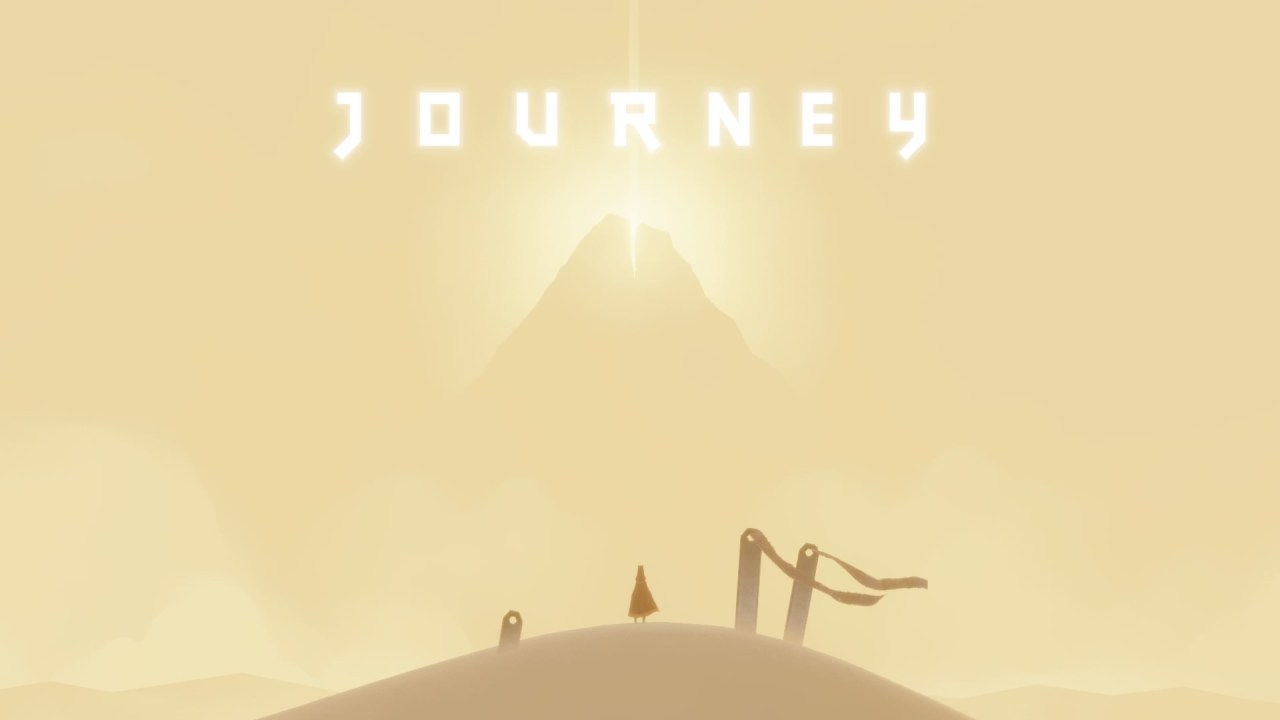
Thatgamecompany’s indie smash hit Journey was released all the way back in 2012. I still remember 2012 – I was a sophomore in high school with no money and thus no way to get new games. Still, I would have scraped whatever I could together or tried asking my parents had I knew what I was missing out on.

In Journey, the player controls a nameless, red-robed protagonist. They meander through deserts, soar above ruins, and behold breathtaking spectacles.

By this point, you’ve probably already heard praise for the game (it won several awards and is widely considered to be one of the best video games of all time). But let me tell you why it’s still one of the best, at least for me.

Let’s get the stuff people have already said out of the way – the simplicity of the visual art style is quite beautiful. The auditory art (music and sound design) is arguably superior even to that of the visuals. Everything about the game was designed to evoke emotion from the player, and it does that so well. The final major point harped on already is the chance to meet another player who you can possibly complete the game with.

My experience was just that – I met two players in my journey. The first departed abruptly. Moments after, I met another player who I played through nearly the entire game with. We completed all but the very first area together. There were times when I thought I had lost them, but we found one another, rapidly chiming at one another in excitement and relief (the game’s only mode of communication between players is a faint chime emitted by a single button press). They must have been a veteran at the game, because they made sure to lead me to every collectible along the way, as well as show me every gorgeous setpiece. When we finished Journey, I literally held a stunned expression, reciting the phrase, “this is amazing” repeatedly. Though the game was short, it was one of the best I’ve ever played.

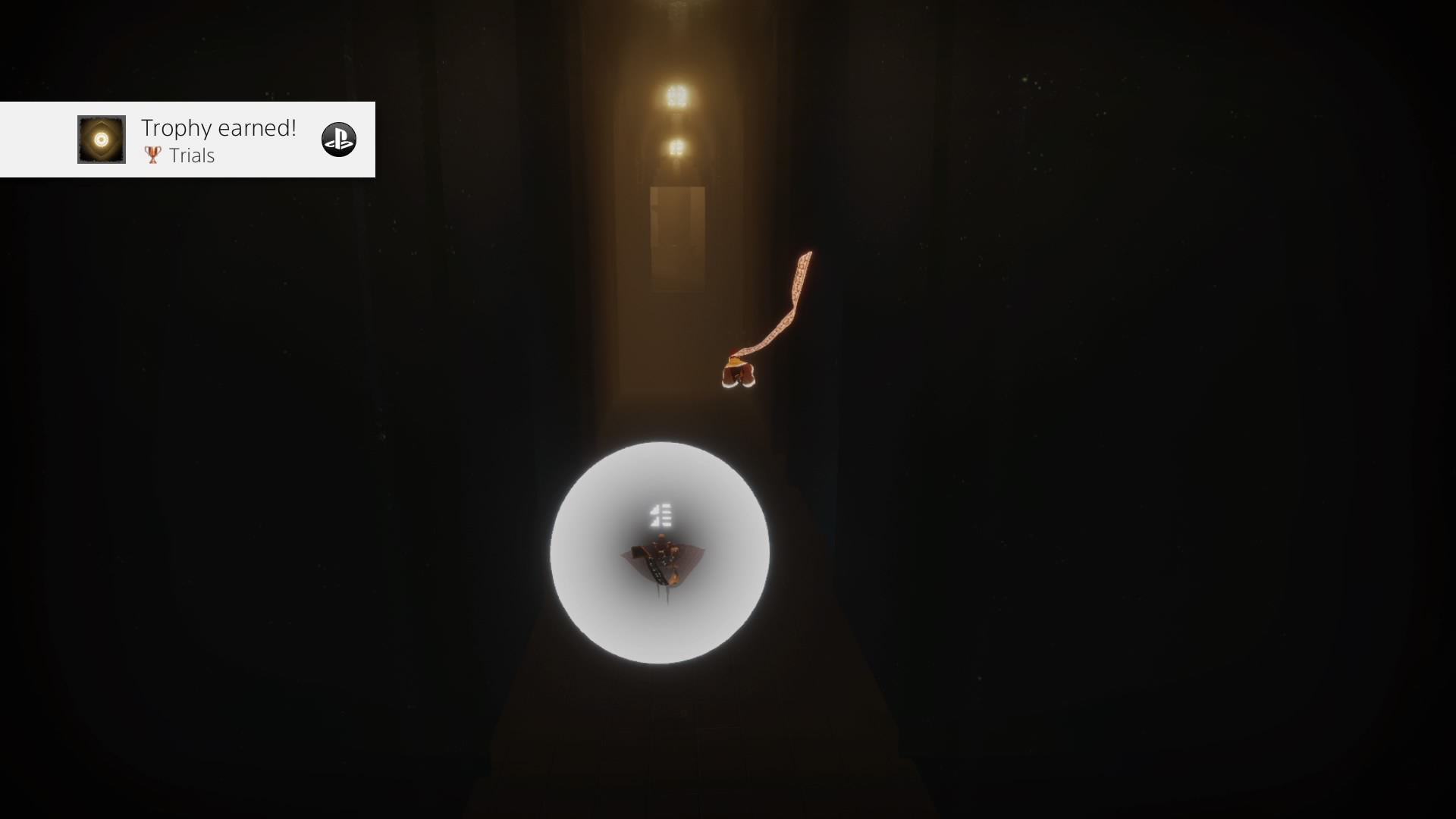
(Journey) Navigating a dark corridor with my companion

Another major accomplishment that Journey nailed was what it said about indie games. Its quality expressed the now-popular idea that indie games can be just as good as, or superior to, those produced by much larger development teams and studios. Before Journey, it had been awhile since i played an indie game. Now, I aim to give them a lot more of my time and money.

Furthermore, Journey reminded me how important simplicity is. It’s easy to get caught up in the expectations of one’s own surroundings, just like it’s easy to think that complexity equates to quality or excellence. In reality, beauty exists in a product, regardless of its complexity, because of the execution. Journey has that in spades. It has inspired me to try keeping things simple more often, as well as appreciate when something simple does something well. Throughout my own journeys, I doubt it will be anytime soon that I forget the one Thatgamecompany made.

A New Series – Late to the Party

Life is often busy. We’ve all had those moments where we were unable to do something we really wanted to because of obligations and responsibilities. In the moment, it sucks, but success requires sacrifices. Sometimes we experience missed opportunities, forever lost in the passage of time. Other times we are fortunate to be able to revisit these.

Over the years, I missed the releases of a lot of games. I wanted to play them all, but life got in the way and I had to focus on my goals. Luckily, games can wait. They’re not going anywhere (most of the time, anyway), and one of my favorite parts about them is that I can usually pick them up whenever I have the time.

My new series – Late to the Party – will revolve around this experience. Years later, I am returning to games I never got to play in the past. Some could call this a form of “time travel.” Others will call it “patient gaming.” Regardless, there are tons of amazing games out there I have yet to experience, and I’m so excited!

I will be producing reviews and general thoughts on these new (old?) games I play.

Avengers: Endgame Review

**Warning: the following contains major spoilers for the film, Avengers: Endgame. Consider yourself warned.**

This past weekend I had the opportunity to see the highly-anticipated conclusion to the Infinity Wars saga. For the most part, the film was out-standing. Despite the length of the film (a staggering three hours), I thoroughly enjoyed the film.

Visually, the film was packed with epic battle scenes and duels that had me dropping my jaw often. Just like Infinity Wars before it, Thanos’s combat prowess shined time and time again as he found creative ways to menace the Avengers. Among the many masterful scenes throughout the film, I find myself remembering those where Thanos dueled individual Avengers the most. In his duel with Captain Marvel, Thanos seemed to have almost squashed all resistance. Suddenly, a colorful comet plunged from the heavens, piercing Sanctuary II (Thanos’s Ship) and rendering the colossal battleship a gargantuan heap of scrap. In up-close-and-personal combat, Captain Marvel anchored herself and deflected a direct blow from Thanos, before being sent flying as Thanos gracefully transferred an infinity stone to his empty hand and delivering what could only be described as a cosmic punch.

Another amazing scene was one I had been anticipating for some time – Captain America wielding Mjolnir (Thor’s hammer). Having some knowledge of the comics, it came as no surprise to me that another Avenger was worthy of protecting the realm. Captain America’s cascading siege against Thanos with his shield and Mjolnir earned the applause it received from everyone in the theater I was in. When he channeled thunder, an indescribable surge of inspiration pulsated throughout my being.

Suffice to say the theme of inspiration was plentiful in the film, as yet another masterful scene with a well-executed subtext impressed me. When Spiderman was fleeing Thanos, infinity gauntlet in tow, Captain Marvel led the entire legion of heroines as they teamed up to face Thanos. As a man, I can barely fathom the impact such a scene had on all the girls in the audience. Personally, I admire how well-executed this scene was; the centerpiece of the scene was female empowerment that shined without subverting any other cause. Such an accomplishment warrants applause.

As for the general plot, things can always get touchy when time-travel is involved. Admittedly I sighed a few times at the brash actions of the heroes as they stumbled through the past. They were about as coordinated as expected, complete with literally getting hit by a opening door. Regardless, it was handled relatively well. Thankfully, the popular Thanus theory did not come to fruition.

My primary criticism has de-escalated as I’ve had time to reflect. I was not a fan of how sensitive Thor was, but he was definitely set up to act that way after losing Loki in Infinity Wars and his other family and loved ones previously. Seeing all those he lost was undoubtedly heartbreaking to Thor. His new physique juxtaposed this heavy overtone by functioning as comic relief. It was a sensitive balancing act that I believe Marvel pulled off.

Overall, I would see Endgame in theaters again, despite the film length. When it comes out on blu-ray, I’m buying it. The only question that remains is: what’s next? Some fans mention the Secret Wars, but I’m not sold on that idea. I don’t know where the Marvel Cinematic Universe is going, but I am glad to have been along for the whole ride so far.

East Coast Game Conference: Reflection

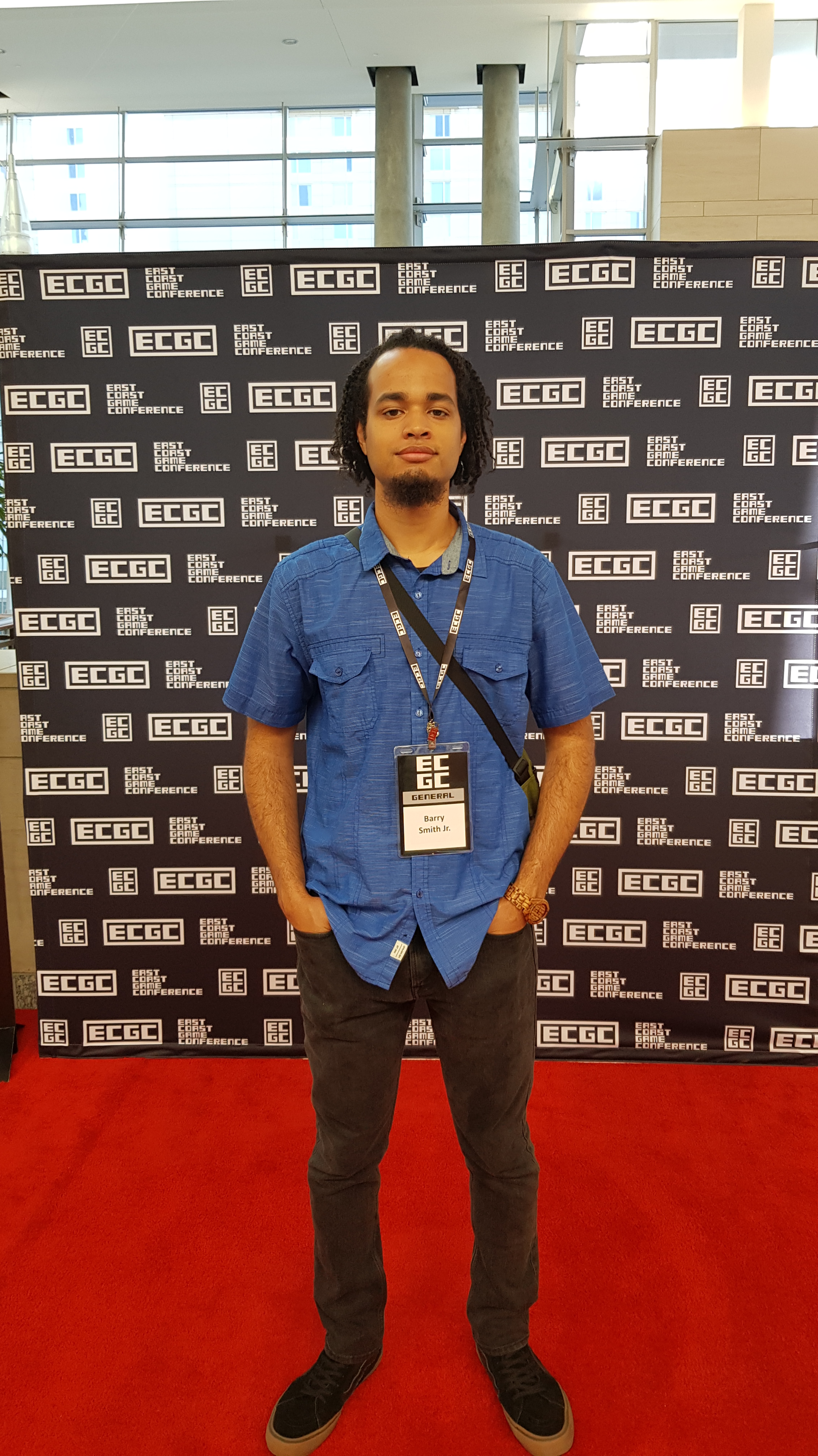
This year’s ECGC was one of the best decisions I’ve made all year. There wasn’t a single educational session I regret participating in, and I had the opportunity to meet some big names in the game industry. Most of the sessions I attended were centered around developing writing skills relevant to video games. Regardless, I picked up some information that has undoubtedly already made be more proficient in my craft, as well as improved my professionalism.

From brushing elbows with industry heavy-hitters to trying out some upcoming indie games, I certainly learned a lot. My most memorable moment was meeting some developers who worked on some of my favorite games, like Bioshock Infinite, as well as learning about how much effort and love some younger indie developers put into the demos they had at the conference expo.
My only regret is how finite my time was at ECGC; I was unable to replay my favorite demos or attend some sessions that had the same time slots as the ones I went to.

PlayStation ID Change

https://blog.us.playstation.com/2019/04/10/online-id-change-on-psn-your-questions-answered/

This new feature is great news for all PlayStation players who have been stuck with an ID they didn’t want, myself included. Perhaps some players have developed a new gamer handle since the inception of their account all those years ago. Regardless, xX_(whatever)_Xx can now leave their (un)original handle behind for something with a little bit more flavor.

I was quite surprised by the lists of games tested with this new feature; the vast majority of PlayStation games are compatible. However, some games I have played, like Dark Souls III, are noted to have identified issues regarding ID changes. Luckily, Sony has considered the risks already and will allow players to revert to an old ID at any point for free.

Sony is receiving praise from players through various platforms, including Reddit, where gamers rejoice in this long-awaited addition to the already-robust list of PlayStation features. Sony seems to have considered all the angles and seems to be working diligently to give the feature a smooth rollout.

First Steps

Thanks for joining me!

My name is Barry Smith. I’m an author and editor. Typically, I stick to fiction and poetry. My favorite genres to read are fantasy and fiction, one of my favorite reads of all time being Blood Meridian.

In addition to my literary pursuits, I’m also a gamer and aspiring game designer. More about that can be found in my student portfolio, located here on my website